
We hope you love the products we recommend! Just so you know, Trendy Mami may collect a share of sales or other compensations from the links on this page.
–
Shopping for an engagement ring is exciting, but with so many diamond shapes, settings, and styles to choose from, finding the perfect one can feel overwhelming. Of course, there’s also the matter of price, especially if you’ve fallen in love with a ring that’s well beyond your budget. That’s where lab grown diamond engagement rings come in, offering the same beauty, brilliance, and durability as natural diamonds, often at a much more affordable price.
Whether you’re drawn to a timeless solitaire, a sparkling oval diamond, or something a little more unconventional, there’s no shortage of gorgeous lab grown diamond engagement rings to consider. These diamonds are chemically and physically identical to mined diamonds, giving you plenty of flexibility when it comes to choosing a larger carat size, higher clarity grade, or more elaborate setting without spending a fortune.
With so many beautiful options available, we’ve rounded up some of the most stunning lab grown diamond engagement rings we’re loving right now. From romantic vintage inspired designs to sleek, modern styles, these rings prove you don’t have to compromise on your dream engagement ring to stay within your budget.
Rings With Timeless Elegance from Shane Co
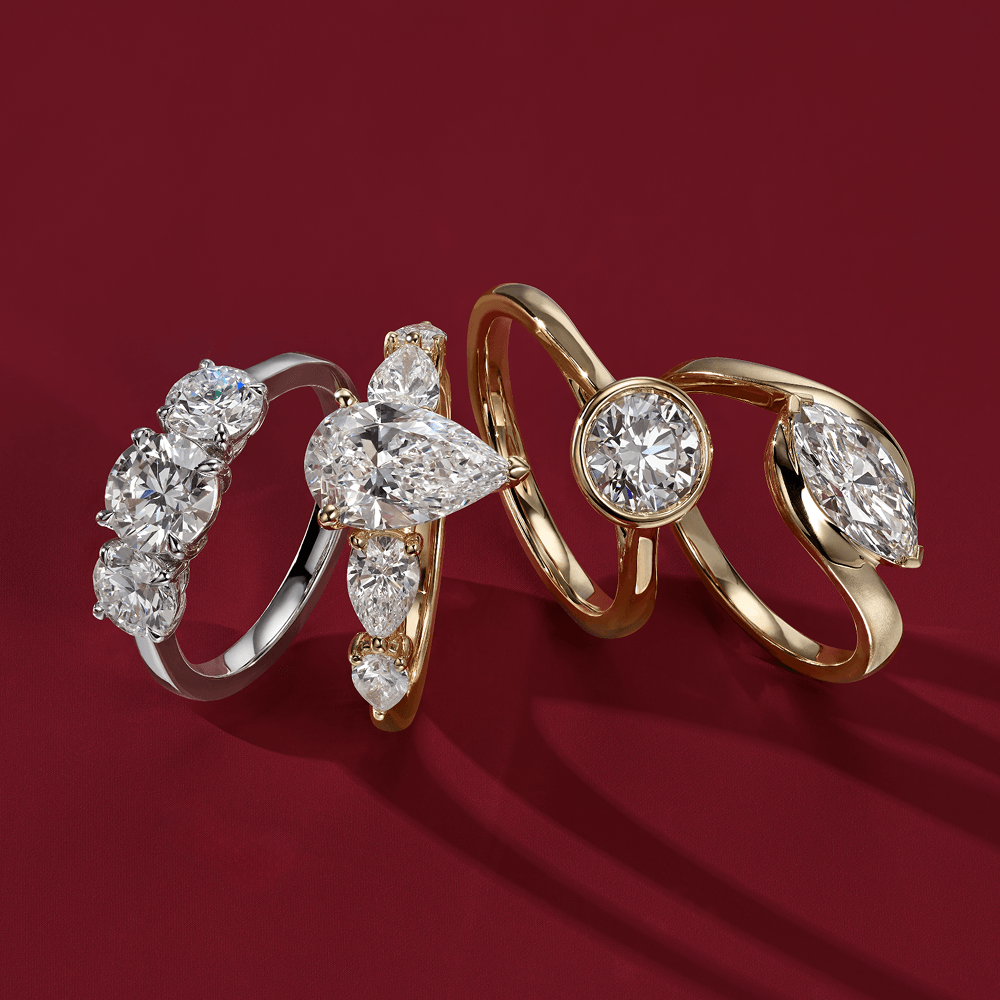
If you’re dreaming of a gorgeous engagement ring that combines timeless elegance with a little personality, Shane Co. has some stunning lab grown diamond options worth exploring. For yellow gold lovers, the Audra 1 1/2 ct Lab Grown Diamond Engagement Ring features an oval shaped center diamond surrounded by sparkling accents. If you prefer the brilliance of a white metal setting, the Lace 1 5/8 ct Lab Grown Diamond Engagement Ring features an oval shaped center diamond surrounded by sparkling accents along the band. Plus, Shane Co. offers free two day shipping and an all inclusive free lifetime warranty, making these beautiful rings even more appealing!
What Are Lab Grown Diamond Engagement Rings?
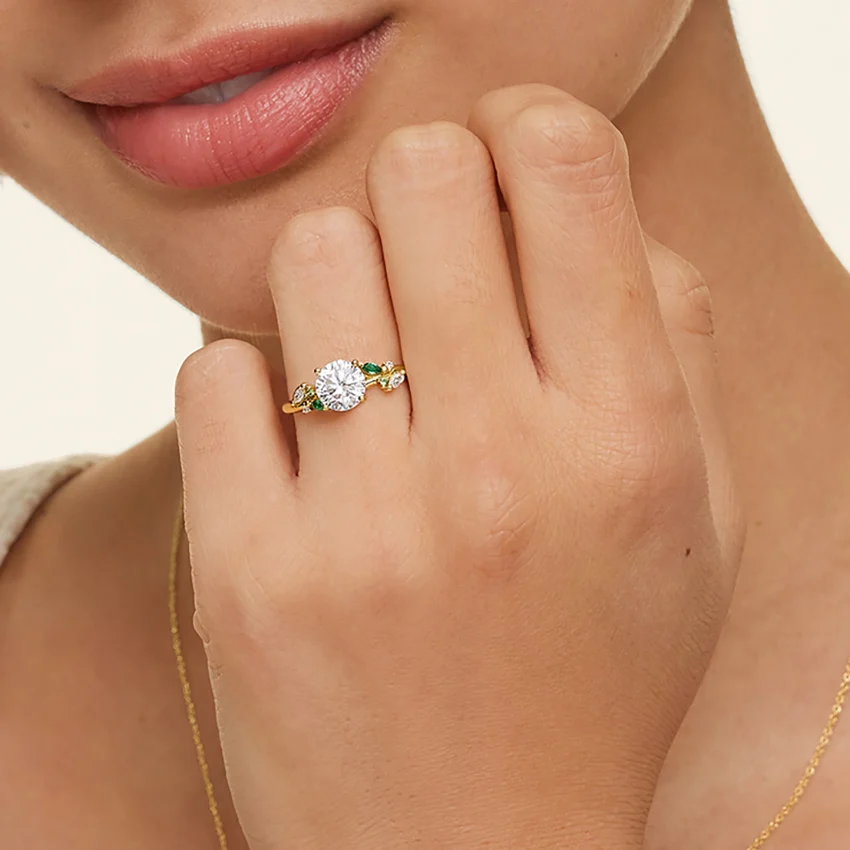
Lab grown diamond engagement rings feature real diamonds that are created in a controlled laboratory environment as opposed to being extracted from the earth. Scientists replicate the conditions that allow natural grown diamonds to form, producing stones with the same chemical composition, crystal structure, and physical properties as mined diamonds.
There are two primary methods used to create these diamonds: High Pressure High Temperature (HPHT) and Chemical Vapor Deposition (CVD). Both produce genuine diamonds, although the growth process and certain characteristics can differ a bit. Once created, the stones are cut, polished, and graded much like natural diamonds! Unlike cubic zirconia or moissanite, lab grown diamonds aren’t diamond alternatives, they’re actual diamonds, and distinguishing them from natural stones generally requires super specialized gemological equipment.
What Are the Most Beautiful Lab Grown Diamond Engagement Rings?
One of the most fun parts of shopping for lab grown diamond engagement rings is discovering just how many beautiful styles are available. Here are some:
Classic Solitaire Engagement Rings
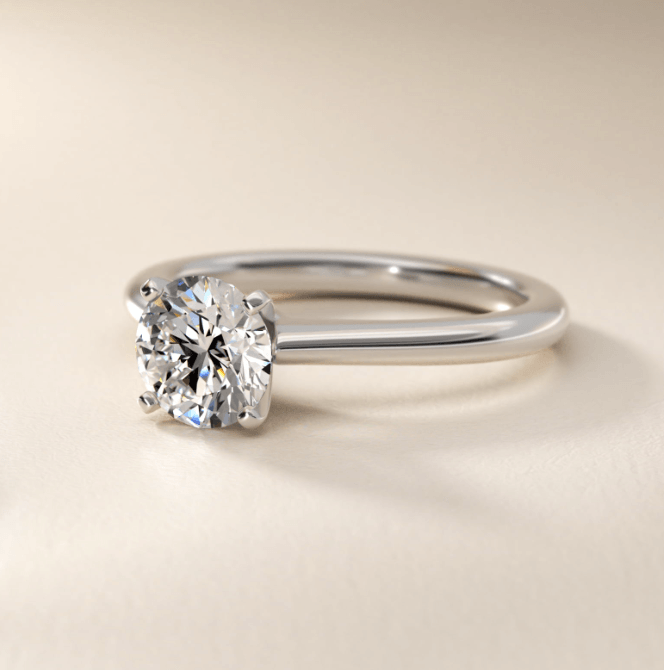
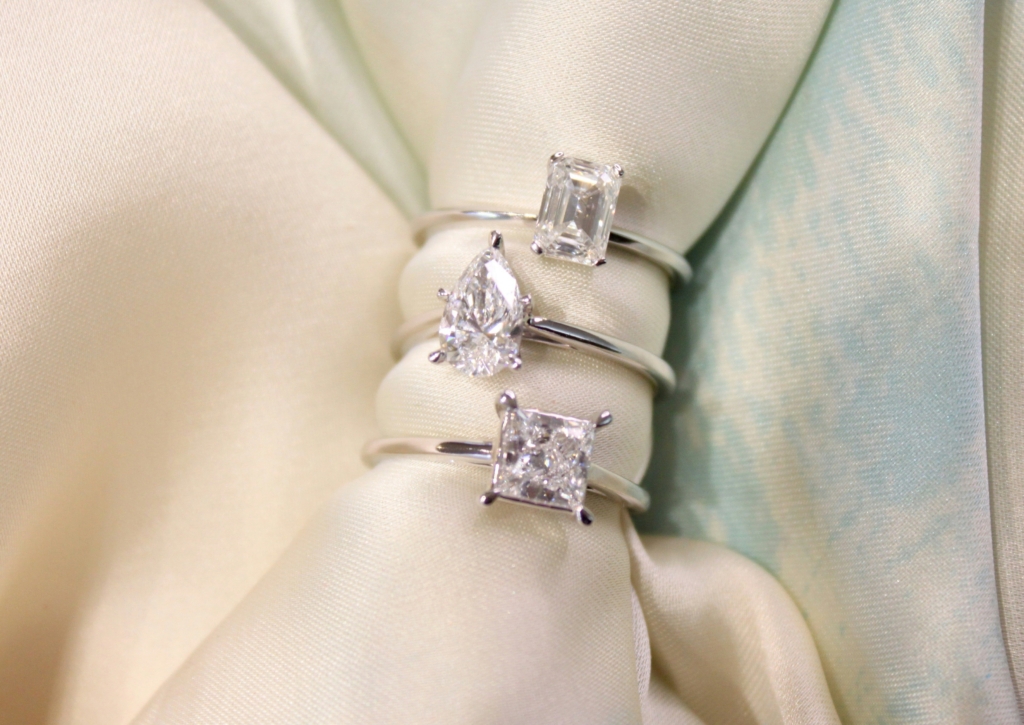
There’s something undeniably beautiful about a solitaire engagement ring! With a single diamond taking center stage, this traditional design allows the stone’s brilliance to shine without competing with additional details. Round brilliant diamonds are especially popular for solitaires, although an oval or princess cut can give the same setting a completely different personality.
Oval Cut Diamond Engagement Rings
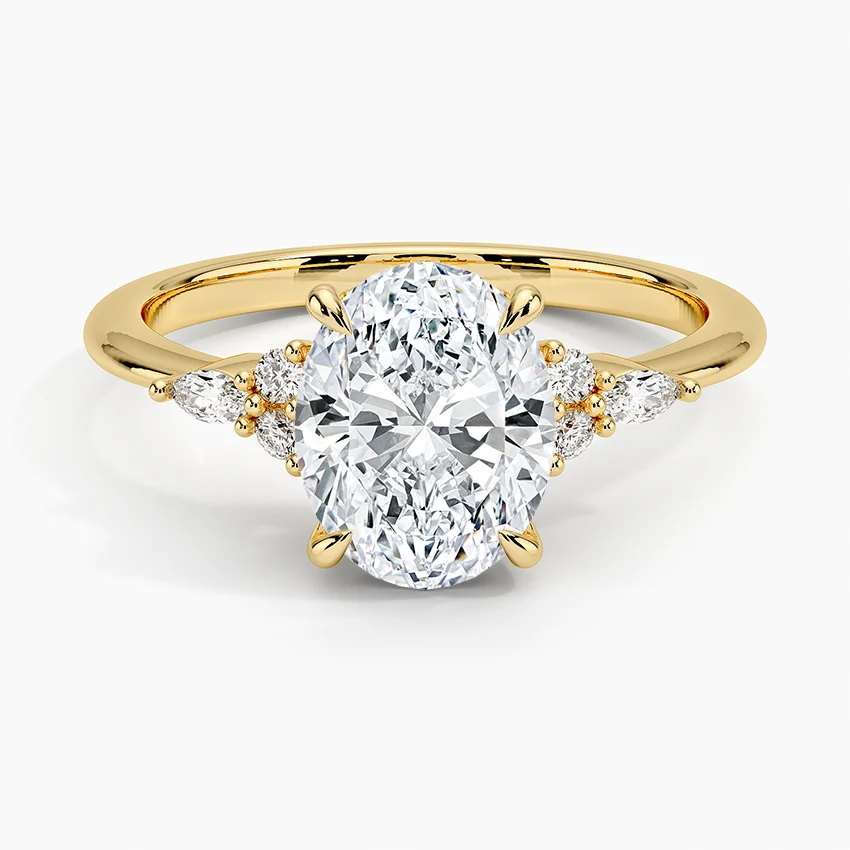
Oval diamonds have a pretty, elongated silhouette. Their rounded edges give them a softer appearance than angular cuts, while their brilliant faceting creates plenty of sparkle.
I particularly love oval diamonds paired with thin gold bands or delicate pavé settings. A hidden halo can add a little extra detail without distracting from the center stone. When shopping, pay attention to the bow tie effect, a little bit of a darker area that can appear across the middle of some oval diamonds.
Radiant Cut Diamond Engagement Rings
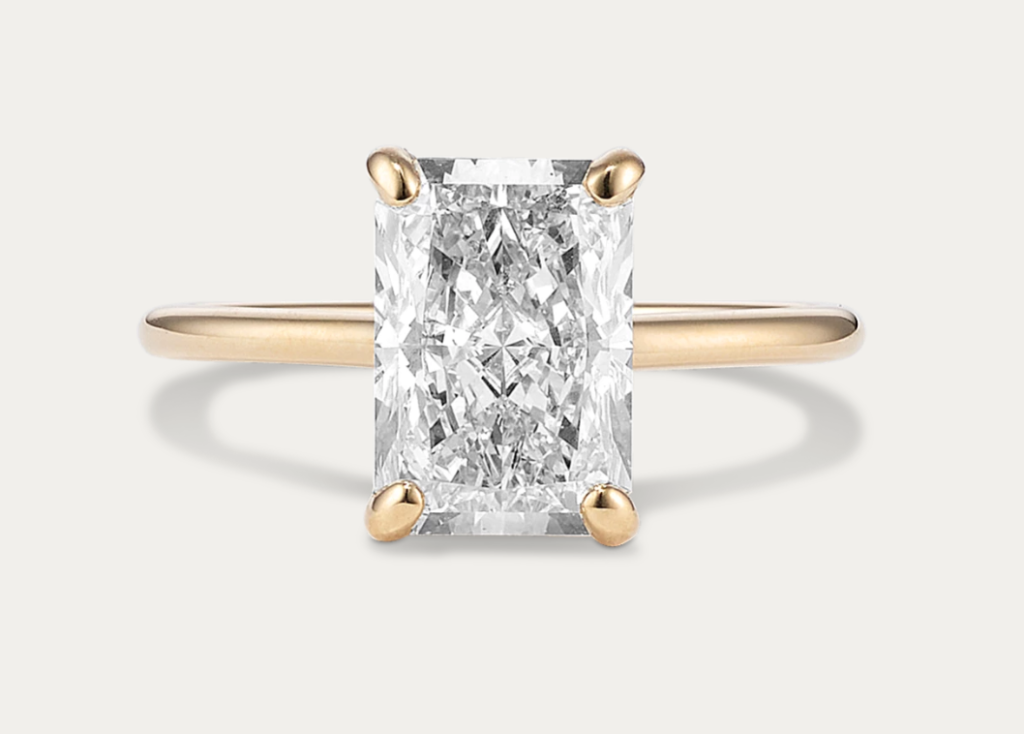
For anyone who loves a little drama in their jewelry, radiant cut diamonds deserve a closer look. Their rectangular or square shape combines the clean lines of an emerald cut with brilliant style faceting, creating a lively, sparkling appearance.
An elongated radiant diamond looks particularly striking in a simple four prong setting, especially with a yellow gold band. You can also choose a three stone design with smaller diamonds on either side for something more elaborate. The radiant cut’s faceting can help disguise some inclusions, making it worth considering if you’re trying to balance clarity and budget.
Emerald Cut Diamond Engagement Rings
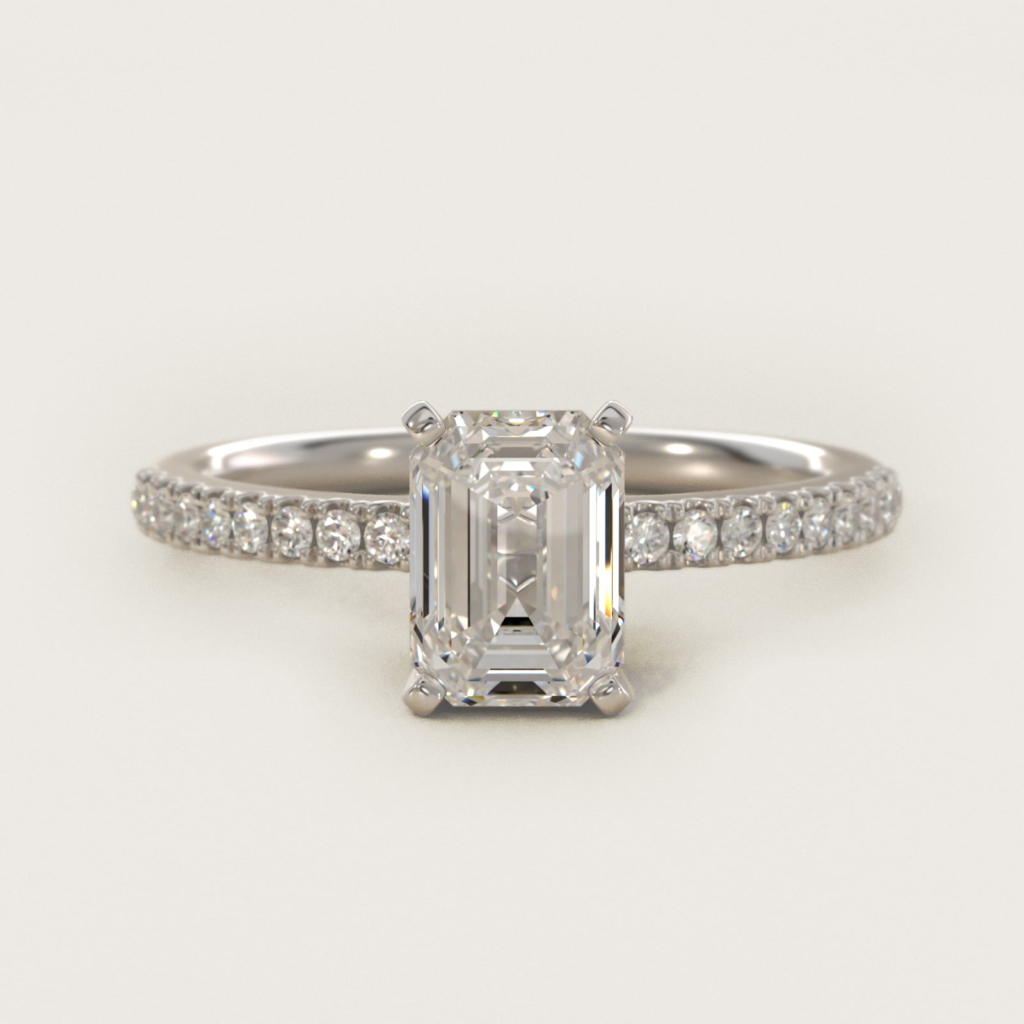
Emerald cut diamonds have a completely different appeal. Rather than emphasizing intense sparkle, their long, parallel facets create broad flashes of light and a distinctive “hall of mirrors” effect.
Hidden Halo Engagement Rings
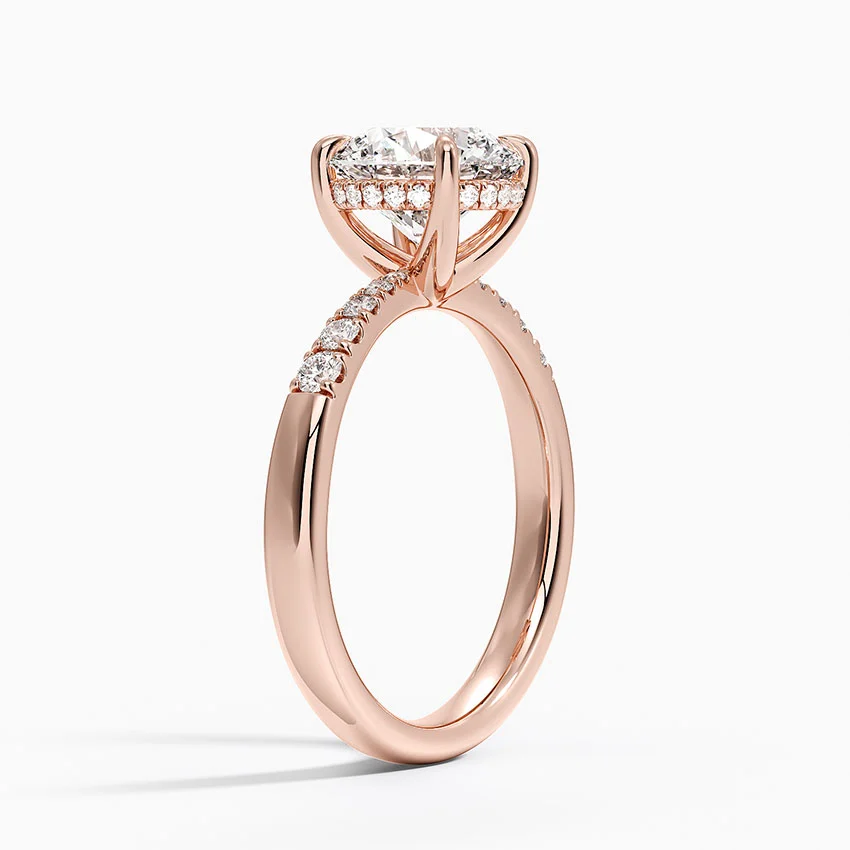
A hidden halo is one of those small design details that can make an engagement ring feel extra special. Instead of surrounding the center diamond with a visible border of smaller stones, a hidden halo places tiny diamonds beneath the center stone, often around the base of the setting.
From above, the ring maintains a simple appearance. Turn it slightly, though, and you’ll see an unexpected touch of sparkle. Hidden halos work beautifully with round, oval, cushion, and radiant cut diamonds, making them an appealing option for someone who appreciates subtle details.
Vintage Inspired Engagement Rings
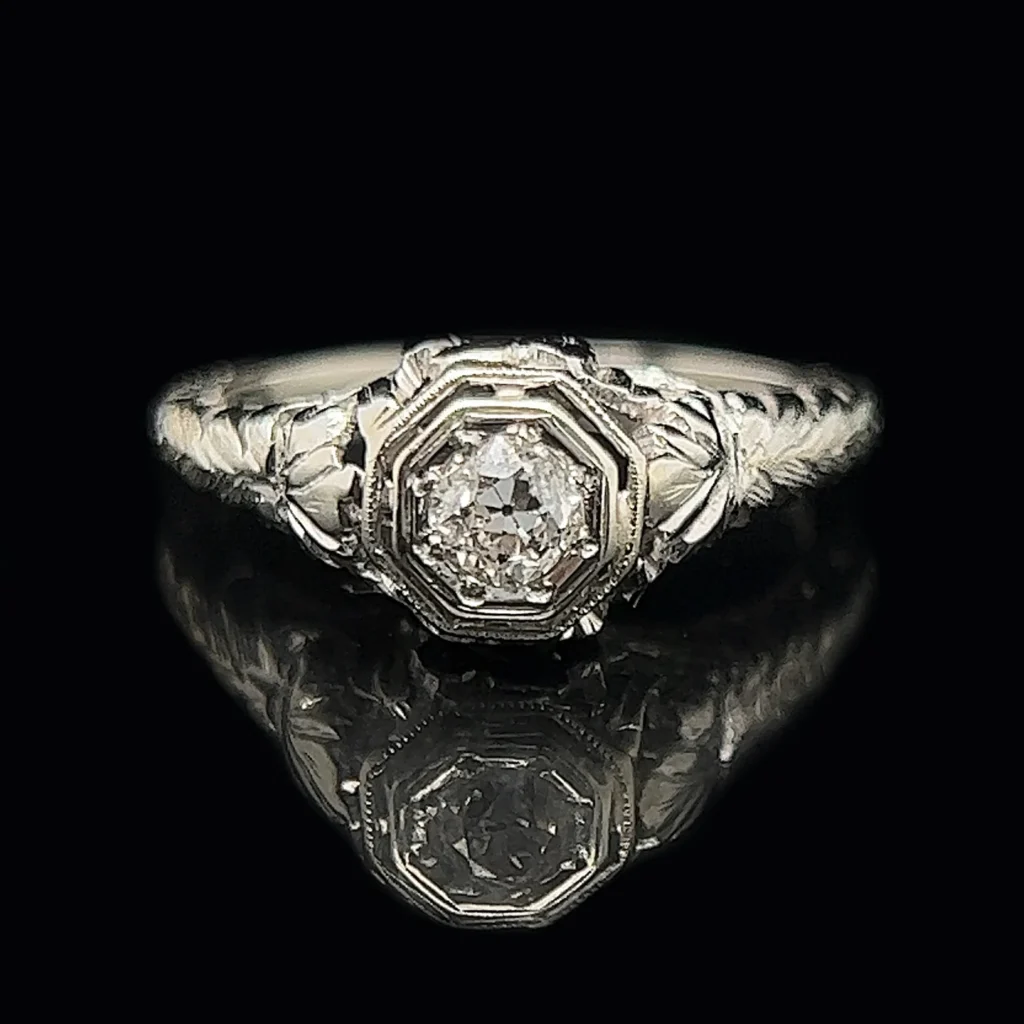
If you’re drawn to antique jewelry, vintage inspired engagement rings offer plenty of character. Think delicate milgrain detailing, engraved bands, floral motifs, and intricate settings that feel reminiscent of another era!
Cushion cut and round diamonds are especially lovely in these designs, although an elongated emerald cut can create a beautiful Art Deco inspired appearance. Rose gold can lend a romantic warmth to the ring, while yellow gold complements traditional detailing.
Related: Wedding Planning Timeline Tips Every 2026 Bride Needs
Three Stone Diamond Engagement Rings
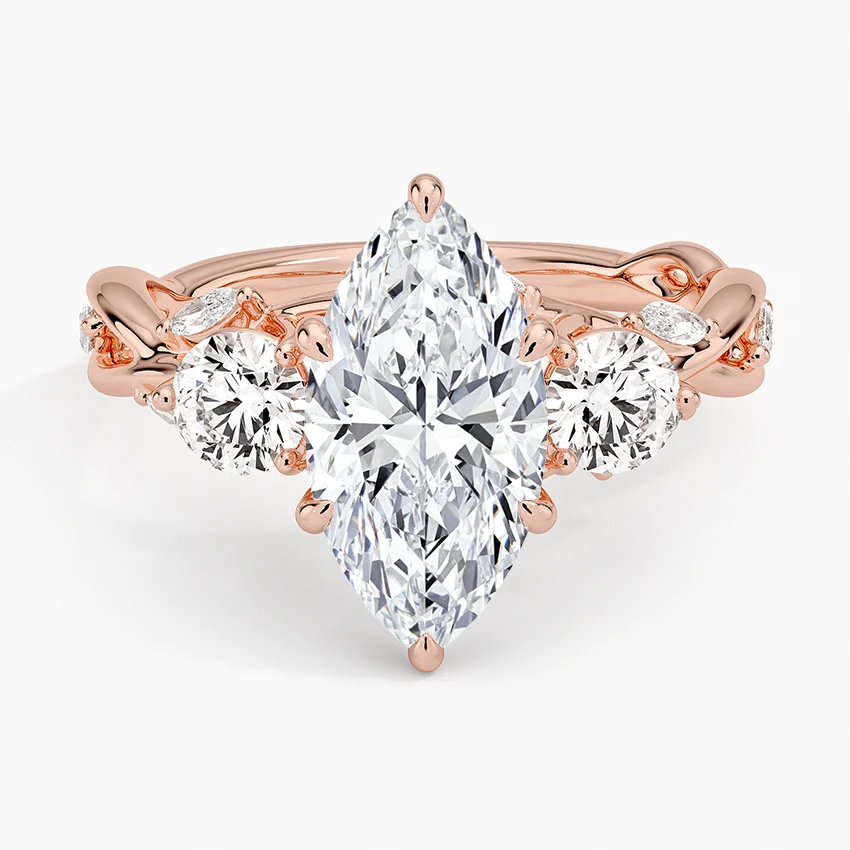
Three stone engagement rings are often associated with the past, present, and future of a relationship, which gives the design a sentimental appeal. They typically feature a larger center diamond flanked by two smaller stones, although the shapes and proportions can vary considerably.
Pear Shaped Diamond Engagement Rings
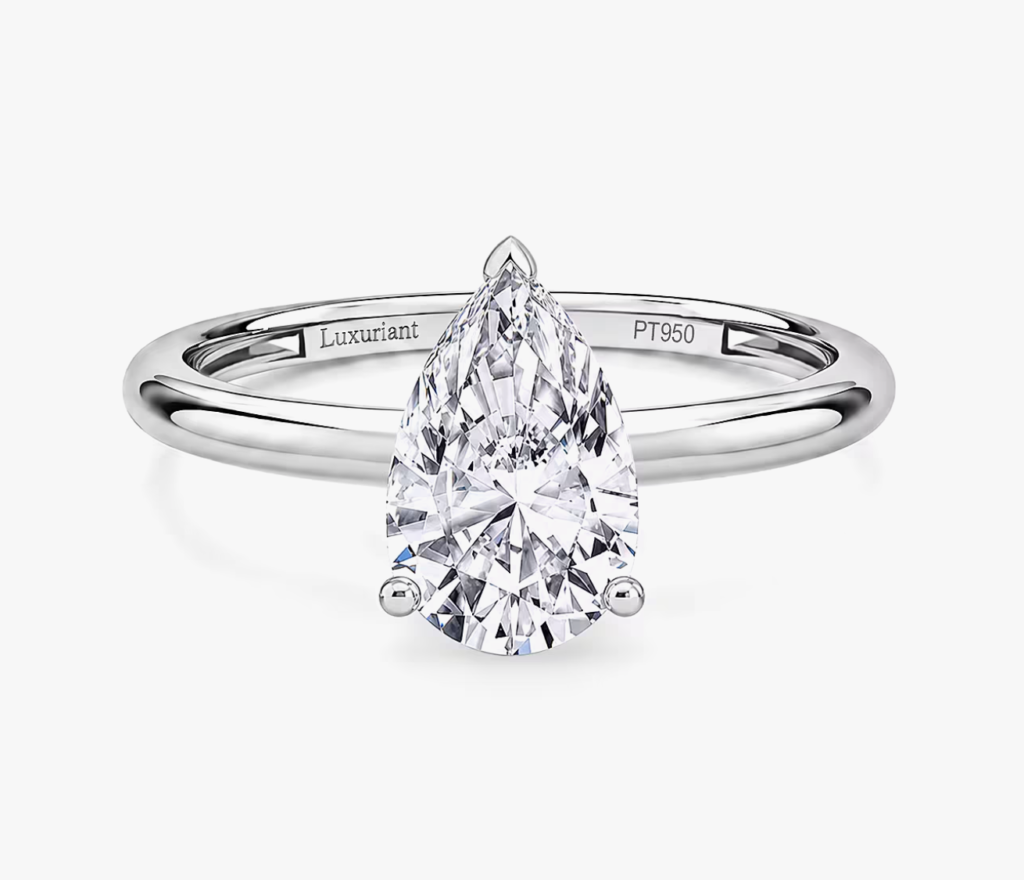
Pear shaped diamonds combine a rounded end with a tapered point, creating a distinctive silhouette that’s both graceful and a little unexpected. Depending on the setting, they can feel modern, romantic, or beautifully dramatic!
Bezel Set Engagement Rings
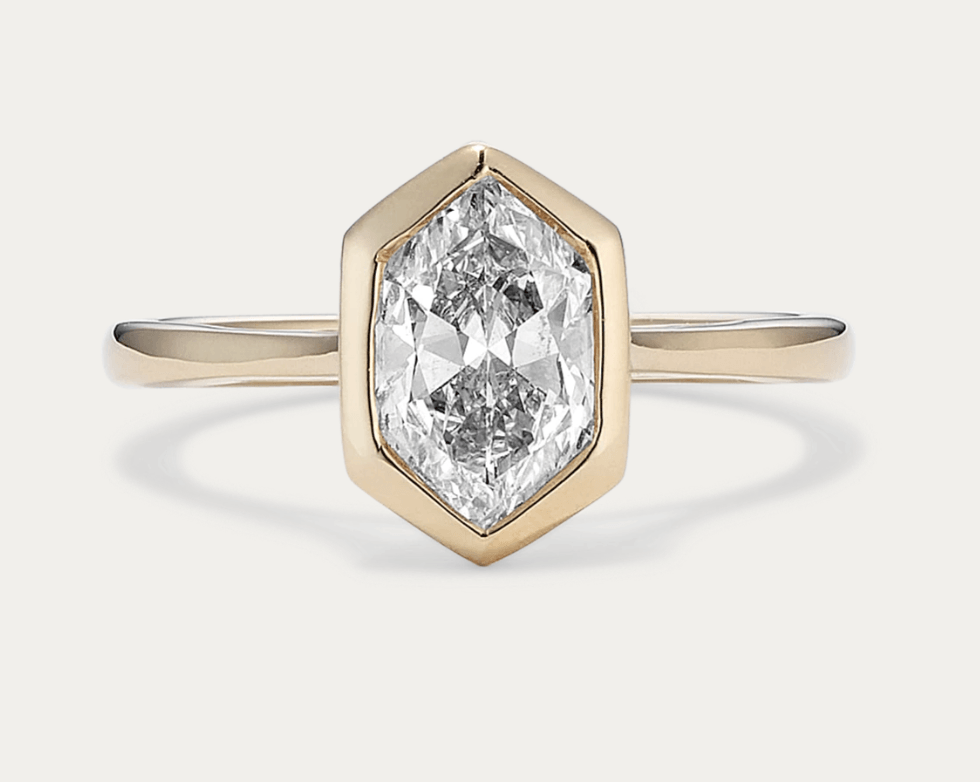
Bezel settings have become a favorite among shoppers who appreciate clean lines and practical jewelry. Rather than using traditional prongs, a bezel setting surrounds the diamond’s edge with a thin rim of metal, creating a smooth, streamlined appearance.
This style can be especially appealing for someone who works with their hands or doesn’t want a ring that frequently catches on clothing. A full bezel offers additional protection around the diamond’s edge, although it doesn’t make the stone indestructible. Oval, emerald, and round diamonds all look beautiful in these contemporary settings.
Cushion Cut Diamond Engagement Rings
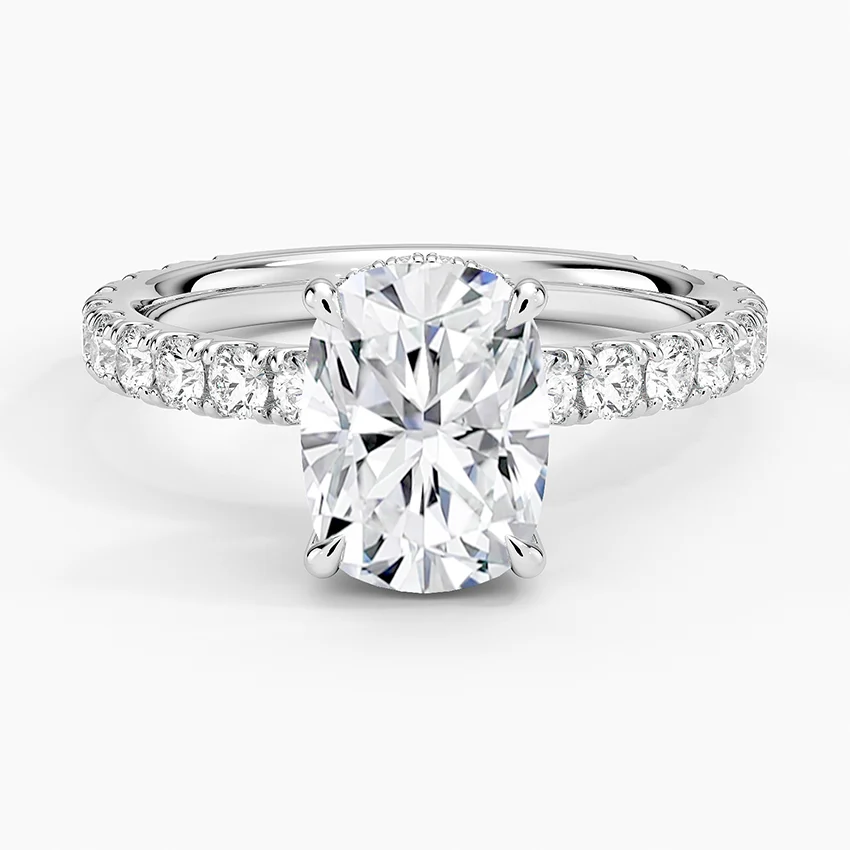
With their softly rounded corners and square or rectangular proportions, cushion cut diamonds have a romantic quality that’s difficult to resist. Some feature broad, chunky flashes of light, while others have a more delicate, “crushed ice” appearance, which I find particularly pretty.
They’re also a really nice option for someone who wants a softer alternative to a princess or radiant cut diamond. Since cushion diamonds can vary considerably in their faceting and proportions, comparing individual stones is really important when choosing your favorite.
Related: Botanical Save the Dates For a Garden Party Wedding
Why Are Lab Grown Diamond Engagement Rings So Popular?
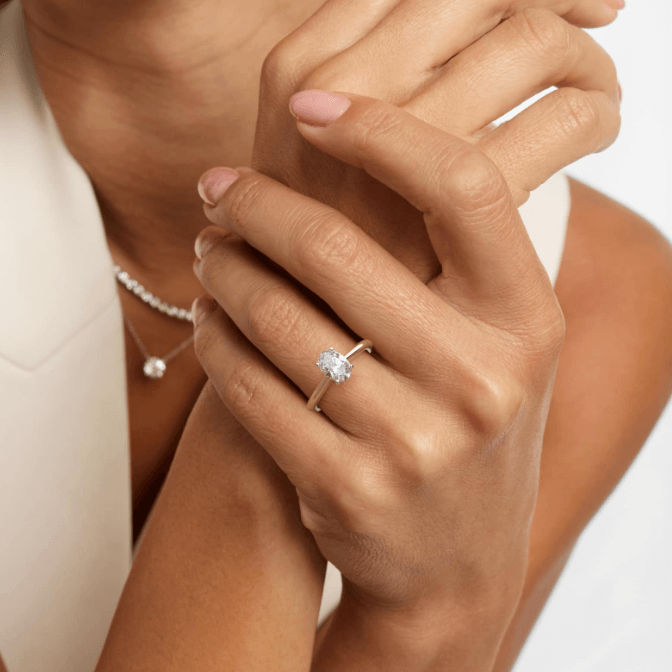
Lab grown diamonds have become an increasingly appealing option for couples who want beautiful, high quality jewelry without spending as much as they might on a comparable natural diamond. Their growing popularity has also encouraged jewelers to offer a wider variety of designs, making it easier to find everything from traditional solitaires to more unusual engagement ring styles.
Are Lab Grown Diamonds More Affordable Than Natural Diamonds?
One of the biggest advantages of lab grown diamonds is their price. Although the exact difference depends on the stone’s quality, size, and retailer, lab grown diamonds generally cost considerably less than natural diamonds with similar characteristics.
This can make a meaningful difference when you’re planning a wedding and trying to manage several expenses at once. Instead of spending most of your jewelry budget on the center stone, you might have more flexibility to invest in a beautiful setting, choose a higher quality diamond, or put the remaining money toward your honeymoon.
However, it’s important to understand that lab grown diamonds generally have limited resale value, and their retail prices have declined substantially as production has expanded. If you’re buying an engagement ring primarily for its beauty and sentimental significance, that might not be a major concern. It’s still worth considering before making such an important purchase.
Do Lab Grown Diamonds Look and Sparkle Like Natural Diamonds?
Yes! Lab grown diamonds can have the same brilliance, fire, and sparkle as natural diamonds. Since both are made of crystallized carbon, their optical properties are essentially identical.
What makes one diamond appear more brilliant than another often comes down to the quality of its cut. A beautifully proportioned lab grown diamond can reflect light more effectively than a poorly cut natural diamond, regardless of their origins.
Color and clarity also influence a diamond’s overall appearance. For example, a diamond with noticeable inclusions or a warmer color grade might look different from a nearly colorless stone with fewer visible imperfections. These characteristics vary among individual diamonds, whether they’re grown in a laboratory or formed naturally.
Related: Wedding Day Emergency Kit Essentials: What to Have On-Hand
What Should You Look for When Buying a Lab Grown Diamond Engagement Ring?
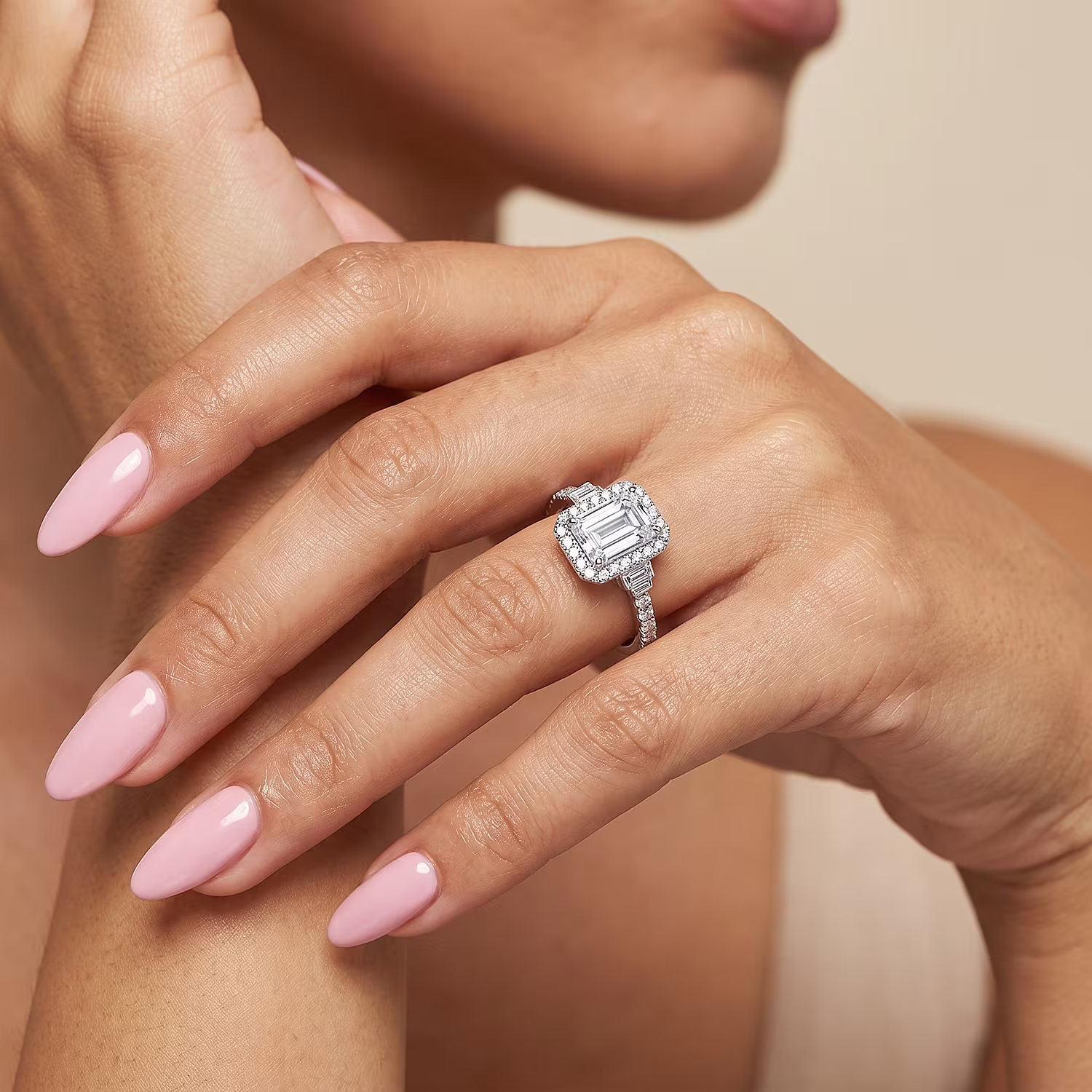
Before buying an engagement ring, you should look way beyond the diamond’s carat weight and overall appearance. The stone’s quality, the durability of its setting, and the reputation of the jeweler can all influence how happy you’ll be with your purchase and how long the ring actually holds up.
How Do You Choose the Right Diamond Cut and Shape?
Diamond shape is really just a matter of personal preference, but it can really change how an engagement ring looks on your hand. Round diamonds are known for their exceptional brilliance, while oval and pear shaped stones create an elongated appearance. Emerald cuts offer a more understated look, and radiant diamonds, my personal favorite, combine angular lines with lively sparkle. Also, diamond shape and cut quality aren’t quite the same thing. Shape actually refers to the diamond’s outline, while cut quality describes how effectively its proportions and faceting interact with light.
Which Engagement Ring Setting and Metal Should You Choose?
Prong settings allow plenty of light to reach the diamond and create a traditional look. Bezel settings surround the stone with metal, offering additional protection around its edges. If you prefer a little extra sparkle, pavé bands and halo settings incorporate smaller diamonds into the design.
Metal choice is totally up to you! Yellow gold offers a warm, classic appearance, which is my favorite, and white gold and platinum create a silvery finish. Rose gold has a pretty pink tint. Platinum is naturally white and generally requires less maintenance to preserve its color, while white gold may need occasional rhodium plating to maintain its bright finish.
Related: How Many Wedding Napkins Do You Need? A Practical Guide and Amazing Examples from VistaPrint
What Should You Know About Diamond Clarity, Color, and Carat Weight?
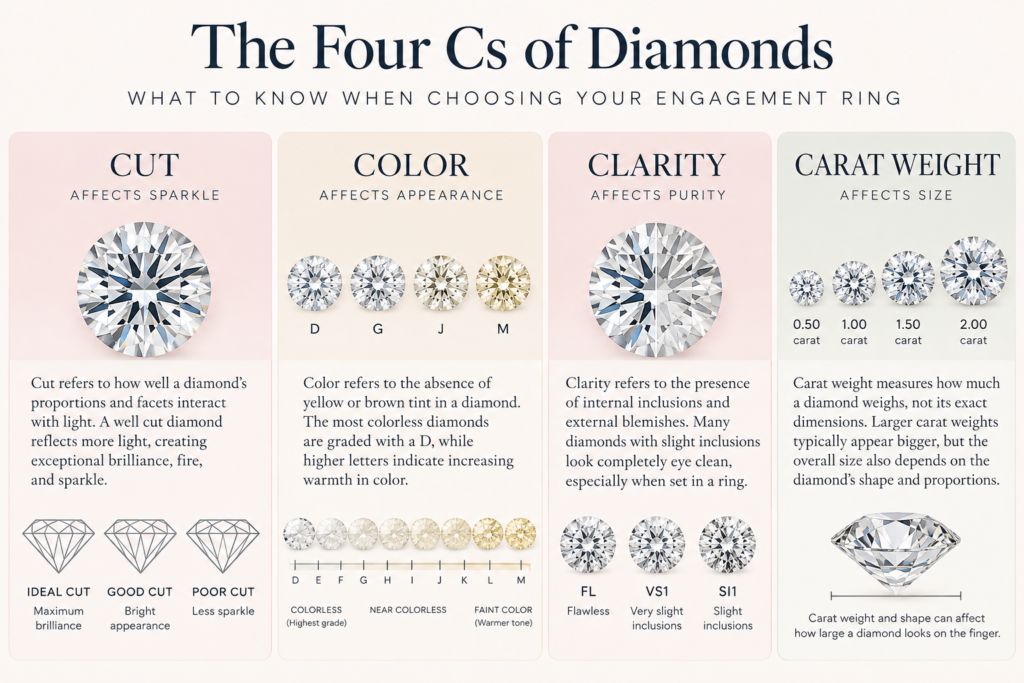
Diamonds are commonly evaluated using the four Cs: cut, color, clarity, and carat weight. Each characteristic plays a role in determining a diamond’s appearance and price, although you don’t necessarily need the highest possible grade in every category.
Clarity refers to the presence of internal inclusions and external blemishes. Many diamonds with VS1 or VS2 clarity grades appear free of noticeable inclusions to the unaided eye, although this depends on the individual stone. Color grades describe how much yellow or brown tint is present in a diamond, with D representing the highest colorless grade on the traditional grading scale.
Carat weight measures how much a diamond weighs rather than its exact dimensions. Two diamonds with identical carat weights can appear different in size depending on their shape and proportions. For that reason, it’s helpful to compare the actual measurements of stones you’re considering instead of focusing exclusively on the carat number.
Related: Wedding Dress Trends 2026: What Brides Are Actually Shopping For
Why Does Diamond Certification Matter?
When you’re purchasing lab grown diamond engagement rings, look for independent documentation, or a grading report, that identifies the diamond and provides information about its characteristics. The International Gemological Institute (IGI) is a widely recognized organization that grades laboratory grown diamonds. The Gemological Institute of America (GIA) also evaluates laboratory grown diamonds, although its reporting approach differs from traditional natural diamond grading.
A grading report should not be confused with an appraisal, which estimates a piece of jewelry’s monetary value. Taking the time to verify these details can help you avoid unexpected expenses and ensure your finished engagement ring looks exactly how you envisioned.
Related: Wedding Invitation Checklist: 6 Things You Must Include
So Many Lab Grown Diamond Engagement Rings, So Little Time
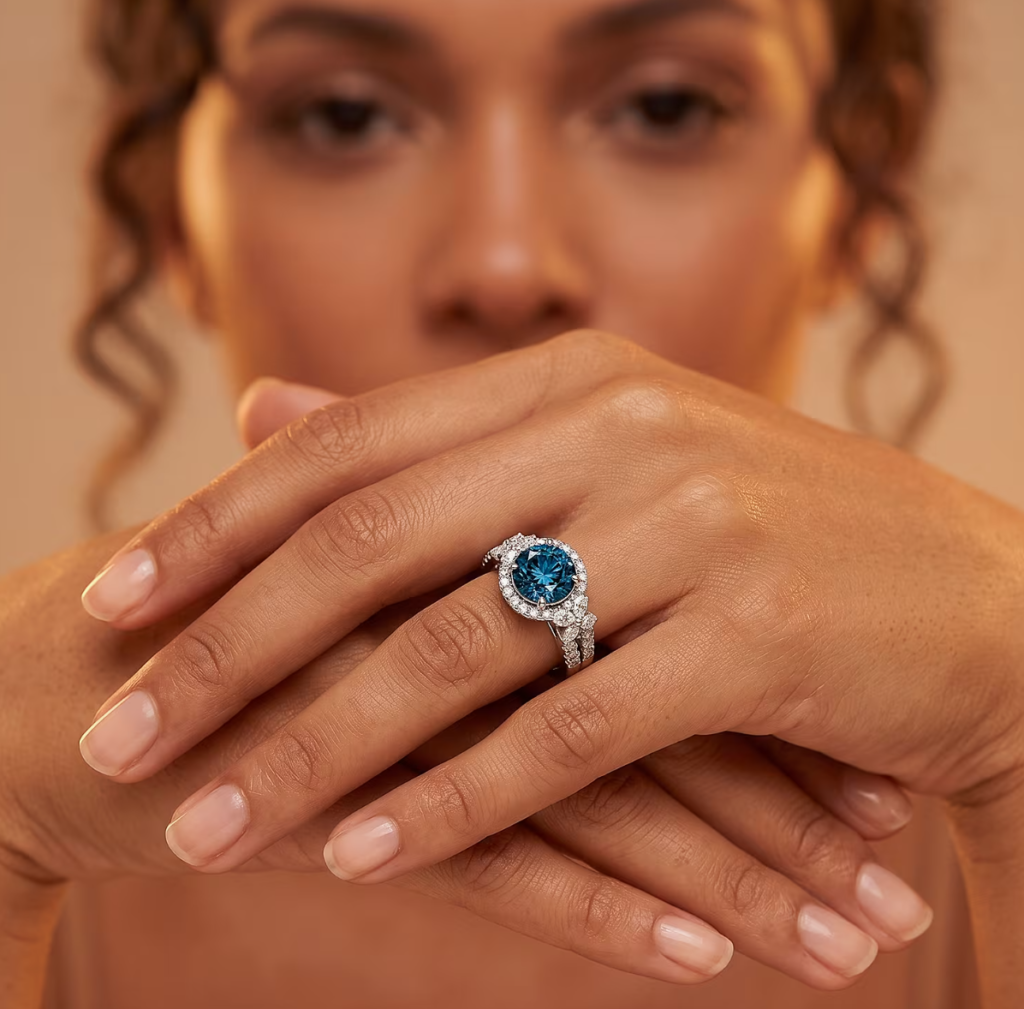
Finding the perfect engagement ring comes down to choosing something that reflects your personal style, fits your budget, and feels just as special years from now as it does today. Whether you prefer a classic round solitaire or an eye catching radiant cut diamond, there’s a beautiful ring out there for every bride to be.
Lab grown diamond engagement rings make it easier to explore different diamond shapes, carat sizes, and settings without the higher price tag often associated with natural diamonds. With so many stunning designs to choose from, you can find a ring you’ll be excited to wear every day, all while leaving a little more room in your wedding budget for everything else you’re dreaming of.
Read Next: Our Favorite Polished and Preppy Athletic Wear Outfits for Fall