


We hope you love the products we recommend! Just so you know, Trendy Mami may collect a share of sales or other compensations from the links on this page.
–
Nothing ruins a backyard barbecue, evening walk, or family camping trip faster than a swarm of mosquitoes or ticks! If you’re looking for a safer alternative to more conventional sprays, making your own natural bug repellent homemade solution is easier than you may think! With just a few simple ingredients, you can create a spray that helps keep unwanted pests away while giving you more control over what you’re putting on your skin, which is always a great thing.
One of the biggest benefits of using a bug repellent homemade recipe is knowing exactly what’s inside. Many people prefer plant based ingredients and essential oils over products made with long ingredient lists they don’t recognize. Whether you’re spending time in the garden, relaxing on the patio, or heading out for an outdoor adventure, a homemade bug repellent can be a convenient option to have on hand.
Finding a good bug repellent homemade recipe often comes down to choosing ingredients that fit your needs and learning how to use them correctly. From effective essential oils to simple mixing tips and storage recommendations, our guide will help you make a natural bug repellent homemade spray that’s quick to prepare and ready whenever you need it.
Best Ingredients for a Natural Bug Repellent Homemade Recipe

Choosing the right ingredients is one of the most important parts of making a natural bug repellent homemade spray. While there are plenty of recipes online, not every ingredient has the same reputation for helping deter mosquitoes and other biting insects. Combining effective essential oils with the right base creates a spray that can really work.
Lemon Eucalyptus Essential Oil
Lemon eucalyptus essential oil is one of the most popular ingredients for a natural bug repellent homemade recipe because of its fresh scent and well known insect repelling properties. It’s often chosen by people looking for a plant based alternative to traditional bug sprays. Keep in mind that pure lemon eucalyptus essential oil isn’t the same as oil of lemon eucalyptus, which is processed differently and commonly found in commercial insect repellents.
Citronella Essential Oil
Citronella has long been associated with keeping mosquitoes away, making it a staple in many natural bug repellent homemade recipes. Its bright citrus scent works well on its own or blended with other essential oils for a more balanced fragrance. Many people also use citronella candles outdoors, but adding the essential oil to a homemade spray offers more direct coverage for your skin and clothing.
Lavender Essential Oil
Lavender isn’t just known for its calming aroma. It’s also a favorite addition to many more natural bug repellent homemade blends because its floral scent may help discourage certain insects while making the spray smell more pleasant. Pairing lavender with stronger oils like citronella or peppermint creates a balanced fragrance that’s refreshing without being overpowering.
Peppermint Essential Oil
Peppermint essential oil provides a cool, crisp scent that many people like during the warmer months, and it’s frequently included in DIY bug repellent recipes because some insects tend to dislike its strong smell.
Witch Hazel and Carrier Ingredients
Essential oils should always be diluted before they’re applied to your skin. Witch hazel is a common base because it helps disperse the oils while allowing the spray to dry quickly after application. Some recipes also include distilled water, aloe vera gel, or a skin safe carrier oil to create a more gentle natural bug repellent homemade spray that’s comfortable to wear outdoors.
How to Make Natural Bug Repellent: Step by Step Tutorial
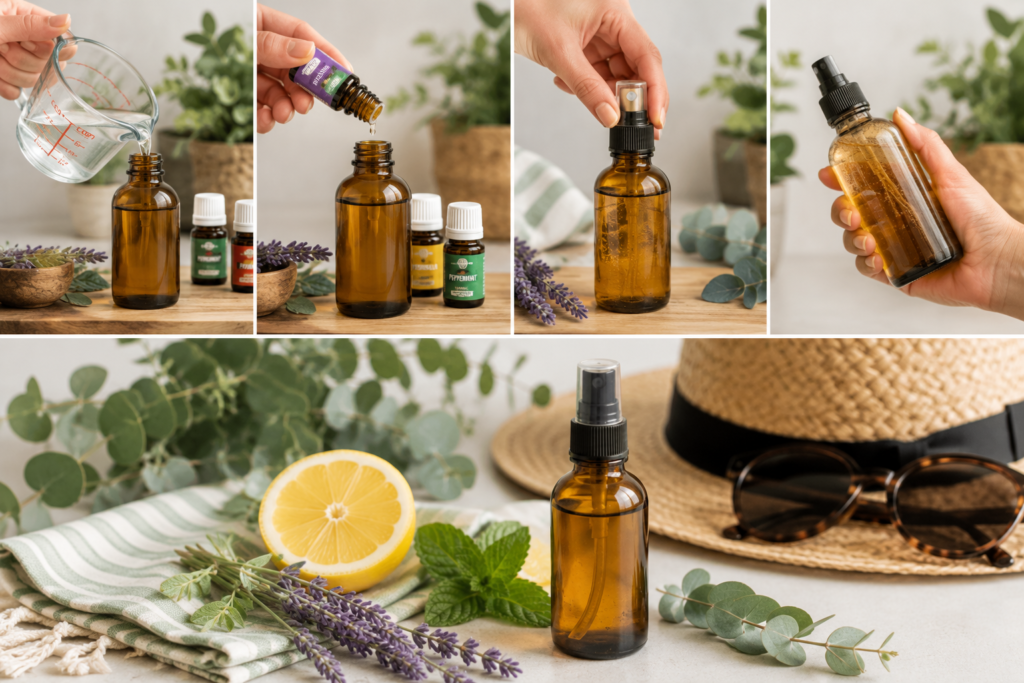
Making your own natural bug repellent homemade spray only takes a few minutes and requires ingredients that are easy to find online or at many grocery and health stores. Once you have everything ready, you’ll be able to mix a fresh batch whenever you need it for backyard gatherings, camping trips, or evenings on the patio.
Ingredients You’ll Need
- 1 half cup witch hazel
- 1 half cup distilled water
- 20 drops citronella essential oil
- 15 drops lavender essential oil
- 15 drops peppermint essential oil
- 10 drops lemon eucalyptus essential oil
- One clean eight ounce glass spray bottle
Step by Step Instructions
- Pour the witch hazel into your clean spray bottle.
- Add the distilled water.
- Add each essential oil, counting the drops carefully.
- Secure the spray top tightly.
- Shake the bottle well until the ingredients are thoroughly combined.
- Label the bottle with the date you made it so you’ll know when you need to prepare a fresh batch.
How to Shake and Apply Your Spray
Essential oils naturally separate from water based ingredients, so always shake your natural bug repellent homemade spray before every use, otherwise ingredients will pool at the bottom of the bottle. Then, you’ll want to lightly mist exposed skin and clothing while avoiding your eyes, mouth, and any broken or irritated skin.
Related: How to Create a Korean Face Mask
How to Use Homemade Bug Repellent
Lightly apply your natural bug repellent to exposed skin, avoiding your face, eyes, mouth, cuts, and irritated areas. Don’t spray it underneath clothing!
Does Homemade Bug Repellent Actually Work?
Homemade bug repellent may contain ingredients traditionally used to discourage insects, but there’s an important difference between that and knowing exactly how effectively a finished recipe prevents bites. EPA states that certain unregistered repellent products containing ingredients such as citronella and peppermint haven’t been evaluated by the agency for effectiveness. That makes it difficult to promise that a natural bug repellent homemade recipe will provide a certain number of hours of protection.
EPA registered insect repellents are different because the finished products have been evaluated for safety and effectiveness when they’re used according to their labels. CDC recommends EPA registered repellents for protection against mosquito bites and lists active ingredients including DEET, picaridin, IR3535, OLE, PMD, and 2 undecanone. A homemade bug repellent shouldn’t be presented as an equivalent substitute when reliable bite prevention is important.
Homemade Bug Repellent vs. EPA Registered Repellent
The main difference comes down to testing. An EPA registered skin applied repellent has been evaluated for human safety and effectiveness when used according to its label.
Many homemade mixtures haven’t undergone that type of evaluation. If preventing bites is particularly important because of mosquitoes, ticks, travel, or local disease activity, choose a registered product with proven protection.
What Essential Oils Help Repel Mosquitoes?
You’ll see citronella, peppermint, lavender, and lemon eucalyptus essential oil in plenty of bug repellent homemade recipes. They aren’t all supported by the same type or amount of evidence, however, and the presence of an essential oil doesn’t establish that a finished homemade bug spray will provide reliable protection.
| Ingredient | Why It’s Used | What to Know |
|---|---|---|
| Citronella | Commonly used in mosquito repellent products | Citronella appears in some registered and exempt products, but EPA hasn’t evaluated the effectiveness of every citronella product |
| Peppermint | Popular in natural bug repellent recipes for its strong scent | Peppermint can appear in exempt products whose effectiveness hasn’t been evaluated by EPA |
| Lavender | Frequently added to homemade bug spray | It should be diluted before skin use and shouldn’t be assumed to provide proven protection on its own |
| Lemon eucalyptus essential oil | Frequently included in DIY recipes | Pure essential oil isn’t the same as EPA registered OLE and hasn’t undergone the same validated testing |
| OLE or PMD | Used as an active ingredient in registered repellents | These are found in EPA registered options and shouldn’t be confused with pure lemon eucalyptus essential oil |
How Often Should You Reapply Homemade Bug Spray?
There’s no scientifically established reapplication schedule that applies to every natural bug repellent homemade recipe. Unlike an EPA registered product with directions for use, your homemade mixture hasn’t been tested as a finished formula to determine exactly how long its protection lasts.
A few factors can change how long any repellent remains on your skin:
- Sweating during exercise or outdoor activities
- Swimming or other water exposure
- Hot weather
- How much product was applied
- The ingredients and concentrations in the formula
- Rubbing the product away with clothing or towels
This is why it’s better not to claim that homemade bug repellent always lasts two hours, four hours, or any other specific period. If you’re using a natural bug repellent homemade mixture and notice mosquitoes beginning to land or bite, don’t assume you’re still protected simply because you recently applied it.
EPA registered products should be reapplied according to their individual labels. When reliable bite prevention matters, choosing a registered repellent with clear usage instructions gives you more dependable guidance than trying to establish your own schedule for homemade bug spray.
How Should You Store DIY Bug Spray?
Proper storage can help protect the ingredients in your homemade bug repellent while also keeping the bottle safely away from children and pets. Since a natural bug repellent homemade spray contains ingredients that can separate or change over time, give the bottle a quick look before each use and shake it thoroughly before applying it.
- Pour your natural bug repellent into a clean bottle with a secure spray top.
- Write the date you made the mixture on the bottle.
- Keep it away from direct sunlight and excessive heat.
- Store it somewhere children and pets can’t reach it.
- Shake the bottle well before each use because the ingredients can separate.
- Check the mixture for changes in its appearance, consistency, or smell.
- Discard the homemade bug spray if you have concerns about its freshness or contamination.
Don’t pour a new natural bug repellent homemade batch on top of an older mixture. Clean the container thoroughly before making another batch instead. Smaller batches are usually more practical for a homemade formula because you can make fresh bug spray as you need it rather than leaving a large bottle sitting around for months.
Natural Bug Repellent FAQs
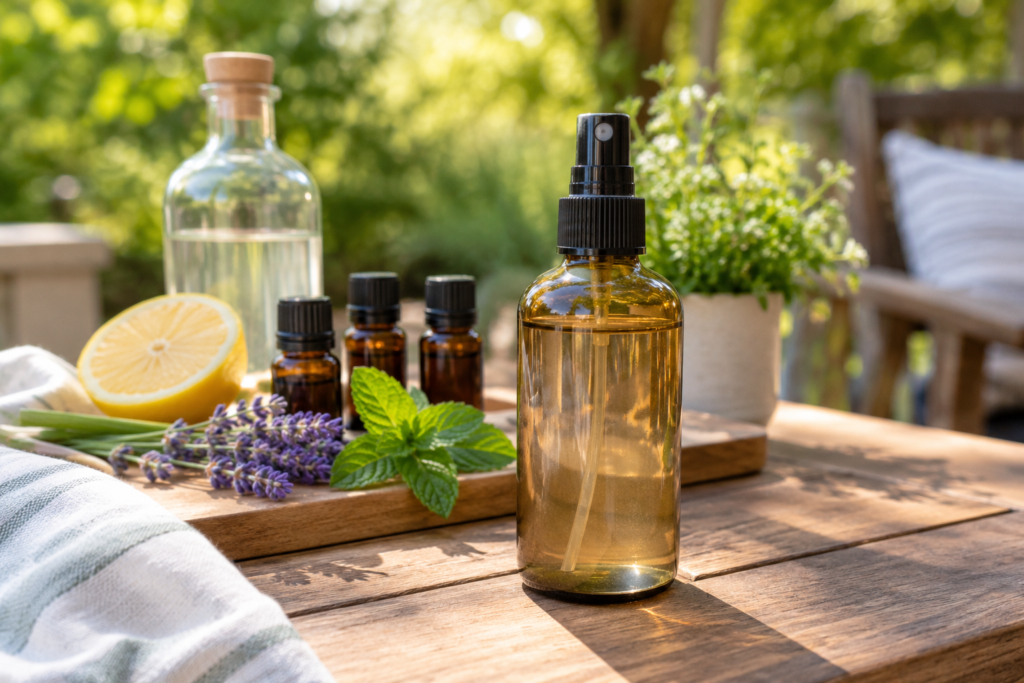
What Is the Best Natural Bug Repellent?
There isn’t one natural bug repellent that’s best for every situation. If you’re specifically looking for proven protection, EPA registered repellents include some plant derived active ingredients, such as OLE and 2 undecanone. A natural bug repellent homemade recipe hasn’t necessarily been evaluated for effectiveness, even when it contains popular essential oils.
Does Homemade Bug Spray Keep Mosquitoes Away?
Some ingredients used in homemade bug repellent are associated with insect repellent products, but that doesn’t prove a particular homemade formula will reliably prevent mosquito bites. EPA notes that some unregistered products containing ingredients such as citronella and peppermint haven’t been evaluated by the agency for effectiveness.
What Smell Do Mosquitoes Hate the Most?
There’s no single smell you can count on as the universal answer to mosquito protection. Citronella, peppermint, and other strong scents are commonly used in natural bug repellent homemade recipes, but scent alone doesn’t establish how effectively a finished mixture prevents bites.
Is Citronella a Natural Mosquito Repellent?
Citronella is used in insect repellent products, including some products registered with EPA. It’s also found in exempt products that EPA hasn’t evaluated for effectiveness. Check the individual product rather than assuming every citronella spray, candle, or homemade bug repellent offers the same level of protection.
Can I Apply Essential Oils Directly to My Skin?
Essential oils shouldn’t automatically be applied directly to the skin just because they’re natural. Oils used in skin products need appropriate dilution, and some people may still experience irritation or sensitivity. Follow the safety information provided for the specific oil you’re using.
Should I Use Homemade Bug Spray for Camping or Hiking?
You can bring homemade bug repellent for casual outdoor use, but consider the insects and disease risks where you’ll be spending time. If ticks or mosquitoes that can transmit illness are a concern, CDC recommends an EPA registered repellent. Clothing that covers exposed skin and other bite prevention measures can provide additional protection.
Is Natural Bug Repellent Better Than Regular Bug Spray?
“Natural” doesn’t automatically mean safer, more effective, or better. A natural bug repellent homemade mixture gives you control over the ingredients you use, while an EPA registered insect repellent has been evaluated for safety and effectiveness when used according to its label. Which option makes sense depends on where you’re going, who will use it, and how important reliable protection from insect bites is.
Enjoy More Time Outside With a Natural Bug Repellent

Mosquitoes and other biting insects don’t wait until you’re prepared, which makes now the perfect time to mix up a natural bug repellent homemade spray before your next outdoor adventure. Spending just a few minutes creating your own blend can help you enjoy more time outside without constantly swatting away bugs. Fresh air, backyard memories, and evenings spent outside are too good to miss because of annoying bugs! Keep these natural bug repellent homemade ideas handy, customize them with your favorite ingredients, and head outdoors with a little more confidence knowing you’ve made a simple solution yourself.