

We hope you love the products we recommend! Just so you know, Trendy Mami may collect a share of sales or other compensations from the links on this page.
–
Starting a yoga routine can feel a little intimidating, especially when you’re brand new to the whole world of yoga. Fortunately, you don’t need years of experience, expensive equipment, or impressive flexibility to enjoy the benefits of yoga! There are lots of yoga poses for beginners that can help you build strength, improve balance, increase flexibility, and feel more relaxed. Even spending a few minutes practicing each day can make a difference in how your body feels.
One of the best things about yoga is how easily you can adapt it to your individual needs and abilities. Some yoga poses for beginners focus on gently stretching tight muscles, while others encourage better posture, strengthen your core, or help you unwind after a stressful day. You can practice from the comfort of your living room, move at your own pace, and gradually become more comfortable with each movement.
Whether you’re hoping to improve your flexibility, relieve everyday tension, or simply find a new way to stay active, these 12 basic yoga poses for beginners are a great place to start. We’ll walk you through the benefits of each pose and explain how to perform them, making it easier to develop a yoga routine you can actually do.
12 Yoga Poses for Beginners to Try
1. Diamond Thunderbolt Yoga Pose (Vajrasana)

Benefits: The Diamond Thunderbolt Pose helps improve digestion by stimulating the digestive organs, which can aid in relieving digestive issues like gas and bloating. This pose also strengthens the pelvic muscles and can be beneficial for women during childbirth. Additionally, Vajrasana is known to improve posture and reduce lower back pain by aligning the spine properly. Regular practice of this pose can also calm the mind and improve concentration.
How to do it: Kneel on the floor with your knees together. Sit back on your heels, keeping your heels slightly apart and big toes touching. Place your palms on your thighs, facing downward. Keep your back straight and shoulders relaxed. Gently close your eyes and focus on your breath. Hold the pose for a few breaths or as long as comfortable. To release the pose, gently lean forward onto your hands and come back to a kneeling position.
2. Gracious Pose (Bhadrasana)

Benefits:
The Gracious Pose, also known as Bhadrasana or Easy Pose, is a comfortable seated position often used for meditation and breathing exercises. It improves posture by aligning the spine, calms the mind, and opens the hips, promoting flexibility and easing tension. Bhadrasana also provides a sense of grounding and stability, aids digestion, enhances blood circulation, and increases body awareness and mindfulness.
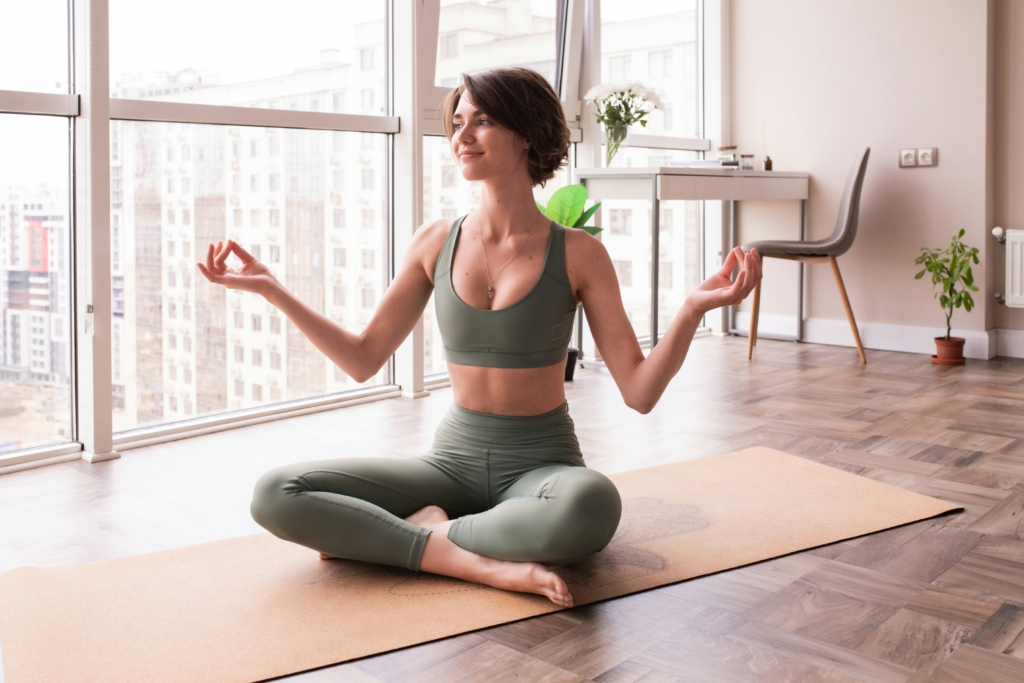
How to do it: Sit on the floor or a yoga mat with your legs extended in front of you. Cross your shins, bringing each foot under the opposite knee. Keep your knees wide, with your feet relaxed and pointed outward. Place your hands on your knees or thighs, palms facing down or up, whatever feels comfortable.
Lengthen your spine, lifting your chest and relaxing your shoulders. Close your eyes if comfortable, and focus on your breath. Hold the pose for as long as comfortable, breathing deeply and evenly. To release, gently uncross your legs and extend them in front of you.
Related: You and Your Child Will Adore Doing These Yoga Poses!
3. Cobra Pose (Bhujangasana)

Benefits: The Corba Pose helps strengthen the spine, improve posture, and open the chest, which can help enhance lung capacity and breathing. Bhujangasana also stretches the abdomen, helping to improve digestion and alleviate constipation. Additionally, this pose can help relieve stress and fatigue while stimulating the organs in the abdomen and lower back. Regular practice of the Cobra Pose can also help tone the buttocks and firm the shoulders, arms, and back.
How to do it: Lie on your stomach on a yoga mat with your legs extended and the tops of your feet resting on the floor. Place your palms flat on the mat under your shoulders, elbows close to your body, and fingers pointing forward. Engage your core muscles and press the tops of your feet, thighs, and pubic bone firmly into the mat. Inhale as you slowly lift your chest off the mat, using your back muscles rather than your arms.
Keep your elbows close to your body. Straighten your arms as much as is comfortable, but do not lock your elbows. Keep your shoulders relaxed. Lift your gaze upward, lengthening the back of your neck. Avoid crunching your neck by keeping your gaze forward or slightly upward. Hold the pose for 15-30 seconds, breathing deeply. Exhale as you gently release back to the mat, turning your head to one side and resting your cheek on the mat.
4. Half Spinal Twist Pose (Ardha-Matsyendrasana)

Benefits: This pose helps improve spinal flexibility and mobility, relieving stiffness in the back. This pose also stretches the shoulders, hips, and neck, reducing tension in these areas. Ardha Matsyendrasana stimulates the digestive organs, improving digestion and alleviating digestive issues. It also massages and tones the abdominal organs, aiding in possible detoxification and promoting overall abdominal health.
Additionally, this pose can help relieve menstrual discomfort and sciatica pain. Regular practice of the Half Spinal Twist Pose can improve spinal health and promote a sense of well-being.
How to do it: Start by sitting on the floor with your legs extended in front of you. Bend your knees and place your feet flat on the floor. Slide your left foot under your right leg to the outside of your right hip. Step your right foot over your left leg and place it flat on the floor outside your left thigh, with your right knee pointing toward the ceiling. Inhale and lengthen your spine, sitting up tall. As you exhale, twist to the right, placing your left elbow on the outside of your right knee.
Press your right hand into the floor behind your back, fingertips pointing away from your body, to help you twist deeper. Keep your spine long as you twist, and avoid collapsing into the twist. Hold the pose for 30 seconds to 1 minute, breathing deeply. To release, untwist slowly and return to the starting position. Repeat on the other side.
Related: The Best Pain-Relieving Yoga Poses Part 1 – Video Included
5. Corpse Pose (Shavasana)

Benefits: The Corpse Pose helps relax the body and mind, reducing stress and anxiety. Shavasana can also help lower blood pressure and reduce insomnia. This pose allows for complete relaxation of the muscles, which can help relieve tension and fatigue. Additionally, Shavasana can improve focus and concentration, making it a beneficial pose for meditation practice. It also allows for deep, conscious breathing, which can help improve lung function and oxygenate the body.
How to do it: Lie flat on your back on a yoga mat or comfortable surface. Extend your legs out straight and let them relax, allowing your feet to fall outward. Place your arms alongside your body, palms facing up, and let your fingers curl naturally. Close your eyes gently. Relax your entire body, starting from your toes and working up to your head. Focus on your breath, taking slow, deep breaths in and out through your nose.
Allow your body to sink into the floor, releasing any tension with each exhale. Remain in this pose for 5 to 15 minutes, or as long as you feel comfortable. To release the pose, gently deepen your breath, wiggle your fingers and toes, and slowly roll onto one side in a fetal position. Take a few breaths in this position before gently pushing yourself up to a seated position.
6. Fish Pose (Matsyasana)

Benefits: This pose helps stretch the chest, neck, and spine, improving posture and counteracting the effects of sitting for long periods. Matsyasana also stretches the muscles between the ribs, which can help improve breathing capacity. This pose stimulates the thyroid and parathyroid glands, which can help regulate metabolism.
Matsyasana also stimulates the abdominal organs, improving digestion and elimination. Additionally, this pose can help relieve tension in the neck and shoulders, reduce fatigue, and promote a sense of relaxation and rejuvenation.
How to do it: Lie flat on your back on a yoga mat or comfortable surface. Bring your hands palms down underneath your hips, with your elbows tucked in close to your sides. Pressing down on your forearms and elbows, inhale as you lift your upper back and chest off the floor. Arch your back and tilt your head back, allowing the crown of your head to rest lightly on the floor. Keep your legs active by pressing through your heels.
Hold the pose for 15-30 seconds, breathing deeply. To release, gently lift your head off the floor and lower your back down to the mat. Extend your legs out straight and rest for a few breaths in Corpse Pose (Shavasana).
7. Seated Forward Bend Yoga Pose (Paschimottanasana)

Benefits: This pose stretches the spine, shoulders, and hamstrings, improving flexibility in these areas. Paschimottanasana also helps calm the mind and relieve stress and mild depression. This pose stimulates the liver, kidneys, ovaries, and uterus, which can improve digestion and relieve menstrual discomfort. Additionally, Paschimottanasana can help soothe headache and anxiety symptoms. Regular practice of this pose can also help reduce fatigue and insomnia, making it beneficial for overall well-being.
How to do it: Sit on the floor with your legs extended in front of you. Keep your spine straight and your feet flexed, toes pointing toward the ceiling. Inhale and raise your arms overhead, lengthening your spine. Exhale and hinge at your hips, bending forward from the waist. Reach for your feet with your hands, grabbing onto your shins, ankles, or feet, wherever is comfortable.
Keep your back straight as you fold forward, leading with your chest. Relax your neck and shoulders. Hold the pose for 30 seconds to 1 minute, breathing deeply. To release, inhale and slowly come back up to a seated position, keeping your spine straight. Exhale and lower your arms to your sides.
Related: The Best Pain-Relieving Yoga Poses Part 2 – Video Included
8. Triangle Pose (Trikonasana)

Benefits: The Triangle Pose stretches and strengthens the thighs, knees, and ankles, improving stability and balance. Trikonasana also stretches the hips, groins, hamstrings, and calves, increasing flexibility in these areas. This pose helps open the chest and shoulders, improving breathing capacity and posture. Additionally, Trikonasana stimulates the abdominal organs, aiding in digestion and elimination. It can also help relieve stress and improve concentration.
How to do it: Start by standing at the top of your mat with your feet hip-width apart and arms by your sides (Mountain Pose). Step your feet wide apart, about 3-4 feet, depending on your height. Turn your right foot out 90 degrees, so your toes are pointing to the top of the mat. Your left foot can be slightly turned inwards. Extend your arms out to the sides at shoulder height, palms facing down. Engage your thighs and core muscles. Inhale and extend your torso to the right over your right leg, keeping your waist long.
Exhale and rotate your torso to the right, bringing your right hand down to your shin, ankle, or the floor outside your right foot. Extend your left arm straight up toward the ceiling, stacking your shoulders. Keep your neck in line with your spine or gently turn your head to look up at your left hand. Hold the pose for 30 seconds to 1 minute, breathing deeply. To release, inhale and press into your feet to lift your torso back to an upright position. Repeat on the other side.
9. Chair Pose (Utkatasana)

Benefits: This pose strengthens the thighs, hips, and ankles, improving stability and balance. Utkatasana also tones the core muscles, including the abdomen and lower back, which can improve posture and alleviate back pain. This pose stretches the shoulders and chest, opening up the chest and improving lung capacity. Additionally, Utkatasana stimulates the abdominal organs, aiding in digestion and elimination. It can also help build heat in the body, increasing circulation and potentially increasing detoxification.
How to do it: Start by standing tall with your feet together and arms at your sides (Mountain Pose). Inhale and raise your arms overhead, palms facing each other. Exhale and bend your knees, as if you were sitting back into a chair. Keep your knees in line with your toes. Shift your weight back into your heels, keeping your spine long and chest lifted. Engage your core muscles and tuck your tailbone slightly to protect your lower back.
Bring your thighs as parallel to the floor as possible, or slightly higher if needed. Keep your arms parallel to each other and to the floor, or bring your palms together in prayer position. Gaze forward or slightly upward, keeping your neck relaxed. Hold the pose for 30 seconds to 1 minute, breathing deeply. To release, inhale and straighten your legs, coming back to standing with your arms at your sides. Repeat the pose 2-3 times, gradually increasing the duration of the hold as you become more comfortable.
Related: Chakra Yoga Poses for Healing – Video Included
10. Child’s Pose (Balasana)

Benefits: The Child’s Pose gently stretches the hips, thighs, and ankles, helping to alleviate stiffness in these areas. Balasana also relaxes the muscles of the front body, including the chest, abdomen, and shoulders, which can help relieve tension and stress. This pose can also help calm the mind and improve mental focus, making it a beneficial posture for reducing anxiety and promoting relaxation. Balasana can also be used as a resting pose during yoga practice to help conserve energy and restore a sense of calm.
How to do it: Start by kneeling on the floor with your big toes touching and your knees hip-width apart. Sit back on your heels and exhale as you lower your torso between your thighs. Lengthen your spine and neck by stretching your tailbone away from your pelvis and crown of your head away from your shoulders. Rest your forehead on the mat and bring your arms alongside your body, palms facing up.
You can also extend your arms forward with your palms on the mat for a deeper stretch. Hold the pose for 30 seconds to a few minutes, breathing deeply and allowing your body to relax. To release, gently walk your hands back toward your body and slowly roll up to a seated position.
11. Wind-Relieving Pose (Pawanmuktasana)

Benefits: This pose helps to improve digestion by massaging the abdominal organs and releasing trapped gases. Pawanmuktasana also helps to tone and strengthen the muscles of the abdomen, hips, and thighs. This pose can be beneficial for relieving lower back pain and improving flexibility in the spine. Additionally, Pawanmuktasana can help to stimulate the bowel movement and alleviate constipation. It is also known to be beneficial for reducing excess fat around the abdomen area.
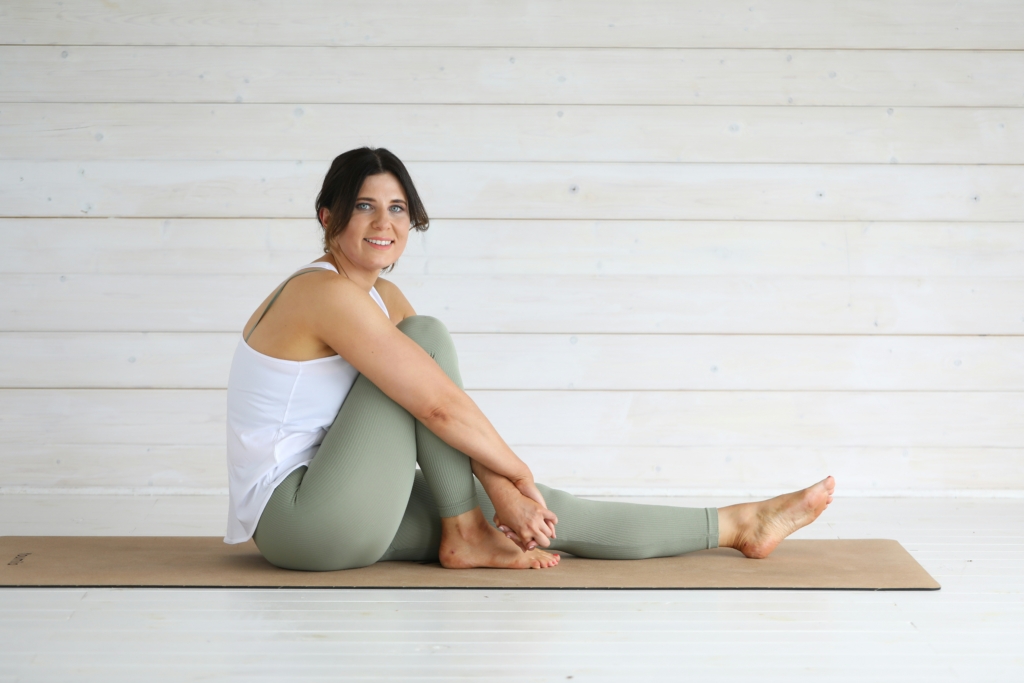
How to do it: Lie flat on your back on a yoga mat with your legs extended and arms by your sides, palms facing down. Inhale and bend your knees toward your chest. Exhale and hug your knees into your chest, wrapping your arms around your legs. Keep your head and shoulders relaxed on the mat. Hold the pose for 15-30 seconds, breathing deeply and gently rocking side to side if desired. To release, exhale and slowly lower your feet back to the mat.
Related: Benefits of Toddler Yoga – Video with Poses
12. Half/Full Standing Forward Bend Yoga Pose (Uttanasana/ Ardha Uttanasana)

Benefits: These poses stretch the entire back of the body, including the spine, hamstrings, and calves, improving flexibility in these areas. They also help to release tension in the neck, shoulders, and back. Ardha Uttanasana and Uttanasana can help calm the mind and relieve stress and anxiety. These poses also stimulate the abdominal organs, aiding in digestion and elimination. Additionally, Ardha Uttanasana and Uttanasana can help improve posture and strengthen the legs, making them beneficial for overall physical well-being.
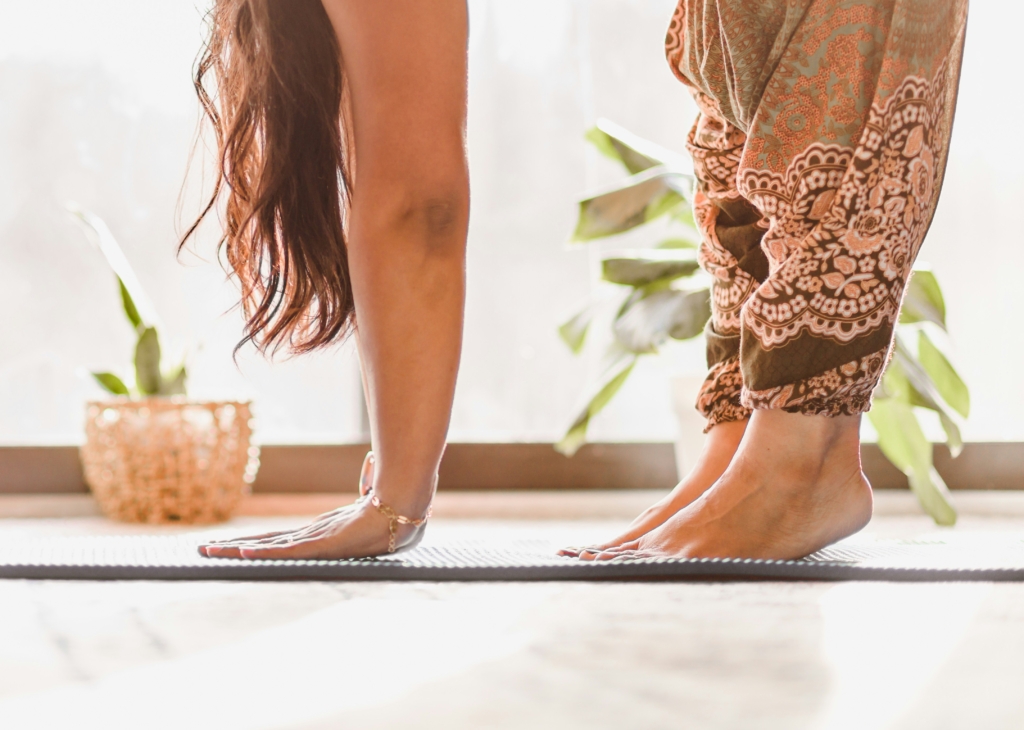
How to do it: Start by standing tall with your feet hip-width apart and arms at your sides (Mountain Pose). Inhale and lift your arms straight out to the sides and up overhead. Exhale and hinge at your hips, folding forward with a flat back until your torso is parallel to the floor. Place your hands on your shins, thighs, or the floor, depending on your flexibility.
Keep your spine long and chest lifted, reaching the crown of your head forward. Engage your quadriceps to lift your kneecaps and keep your legs strong. Hold the pose for 30 seconds to 1 minute, breathing deeply. To release, inhale and slowly come back up to standing, keeping your spine long.
What Equipment Do You Need to Start Practicing Yoga at Home?
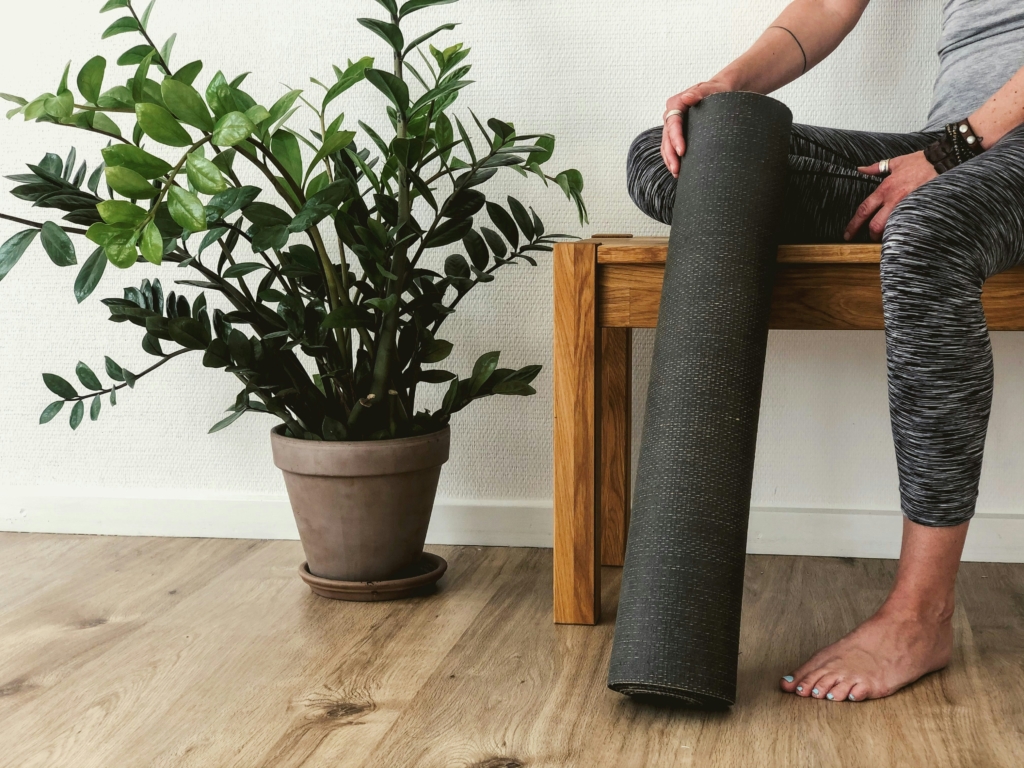
You don’t need much equipment to start practicing yoga at home! In fact, a good chunk of easy yoga poses for beginners can be performed with little more than a comfortable space and clothing that allows you to move freely. A few simple essentials are more than enough to get started:
Do You Need a Yoga Mat to Practice Yoga?
Although a yoga mat isn’t strictly necessary, it’s one of the most useful accessories for beginners! Most yoga mats have a textured surface that helps provides traction, helping prevent your hands and feet from slipping during standing poses like Triangle Pose or Chair Pose. They also provide cushioning for your knees, elbows, and back, which can make floor exercises way more comfortable. A standard yoga mat measuring approximately 4 to 6 millimeters thick is a practical starting point for most beginners, offering a reasonable balance between cushioning and stability.
If you don’t have a mat, you can still practice certain yoga positions on a clean, stable surface that offers just enough grip. Just avoid slippery floors or thick, unstable carpeting that might make balancing difficult.
Are Yoga Blocks and Straps Worth Using for Beginners?
Yoga blocks and straps are helpful if you’re still developing flexibility or find certain stretches difficult to maintain. Rather than straining to reach the floor or forcing your body into an uncomfortable position, these accessories give you some extra support that allows you to practice with better alignment. For example, placing a yoga block beneath your lower hand during Triangle Pose can make the stretch more accessible without compromising your balance. A yoga strap can also help you reach toward your feet during Seated Forward Bend without rounding your back excessively.
What Should You Wear for Your First Yoga Session?
Comfort should be your biggest priority when choosing what to wear for yoga! I recommend you look for super breathable clothing that stretches with your body and doesn’t restrict your movement, especially when bending, twisting, or reaching overhead. Leggings, athletic shorts, fitted T shirts, and comfortable workout tops are all suitable options!
You might want to avoid excessively loose clothing that falls over your face during forward bends or requires constant adjusting as you move between positions. I usually opt for oversized clothing when exercising outdoors or doing cardio, but when doing yoga, that type of clothing usually just impedes my progress. Most importantly, you don’t need a special yoga outfit to get started! Whatever allows you to move comfortably and confidently is perfectly suitable for your first practice.
Related: Athleisure Fashion Trends for Women: Fall 2026 Style Guide
What are the Benefits of Doing Yoga?
Think of yoga as natural medicine for the mind and body, thanks to its healing properties and health benefits. Yoga is something natural and totally free that you can do right now to improve your general well-being. The benefits of these yoga poses for beginners include:
- Lessened anxiety
- Better digestion
- Improved balance
- Relieved menstrual discomfort
- Reduces headache and fatigue
- Helps asthma
- Relives symptoms of menopause
What Are Common Mistakes to Avoid When Practicing Yoga Poses for Beginners?
When you’re first learning yoga poses for beginners, it’s easy to focus too much on getting every position exactly right. However, forcing your body into a stretch or trying to match someone else’s flexibility can lead to unnecessary discomfort or injury. One of the most common beginner yoga mistakes is pushing too far into a pose instead of allowing your flexibility and strength to develop naturally.
Other mistakes include holding your breath, rushing between poses, and overlooking proper alignment. Try to maintain steady breathing throughout each movement, avoid locking your joints, and pay attention to how your body feels. A gentle stretching sensation is normal, but sharp pain is a sign that you should stop or adjust your position.
How Can You Modify Yoga Poses for Beginners?
Many basic yoga poses can be modified to accommodate different flexibility levels, mobility limitations, and physical abilities. You don’t need to perform every movement exactly as described to experience its benefits.
For example, you can bend your knees during a Standing Forward Bend to reduce tension in your hamstrings or place a yoga block beneath your hand during Triangle Pose for additional support. If sitting on the floor feels uncomfortable, try placing a folded blanket beneath your hips during seated poses. You can also use a chair for balance during standing movements or shorten the amount of time you hold a challenging position.
Don’t forget — yoga poses for beginners should feel manageable, even when they’re challenging your muscles. Making small adjustments allows you to practice more comfortably while gradually improving your strength, flexibility, and confidence.
Final Thoughts on Yoga Poses for Beginners
Yoga is one of those activities that can fit into just about any lifestyle, regardless of your age, experience, or fitness level as it’s a holistic approach to improving both physical and mental well-being, making it a valuable practice for beginners and seasoned practitioners alike. These 12 basic yoga poses for beginners outlined in this guide provide a foundation for building strength, flexibility, and mindfulness.
You might start practicing these yoga poses for beginners because you want to become more flexible, only to discover how much you enjoy the opportunity to slow down and focus on yourself. From gentle stretches that ease muscle tension to standing positions that challenge your balance, these yoga poses for beginners offer plenty of ways to support your physical and mental well being.
You don’t have to master every pose immediately or commit to an hour of yoga every day to make it worthwhile, and with a little consistency, these basic yoga poses for beginners can become a relaxing and rewarding part of your everyday routine. You might even find yourself looking forward to those quiet moments on your mat! As you embark on your yoga journey, remember that progress is gradual, and it’s essential to listen to your body and honor its limits. With regular practice and dedication, you’ll soon experience the transformative benefits of yoga, cultivating a sense of balance, peace, and vitality in your life.
Read Next: Comfortable + Cute Soccer Mom Outfits for Fall We’re Wearing on Repeat